
How Guided Strength and Power Training Can Boost Your Sports Performance

When it comes to boosting your athletic performance, it’s not just about training harder, it’s about training smarter. As a qualified sports scientist specialising in running athletics, and someone who has competed for many years, I’m excited to share my combined knowledge and experience on a topic that can truly transform your results: the transfer of strength and power training to sports performance.
Whether you're sprinting, jumping, or changing direction, the right kind of strength and power work can be the game-changer you’re looking for.
Why Strength and Power Matter For Athletes
Strength: the ability to produce high forces against resistance. Power: the ability to perform explosive movements quickly.
These are both crucial for almost every sport. From sprinting to football, basketball to tennis, developing these abilities improves your speed, agility, and resilience under pressure.
That’s why resistance training has become a fundamental part of athletic preparation at every level.
However, not all strength training is created equal. The real magic happens when your training directly transfers to your sport performance. And that’s where guided, smart programming comes in.

The Science Behind "Transfer to Sports Performance"
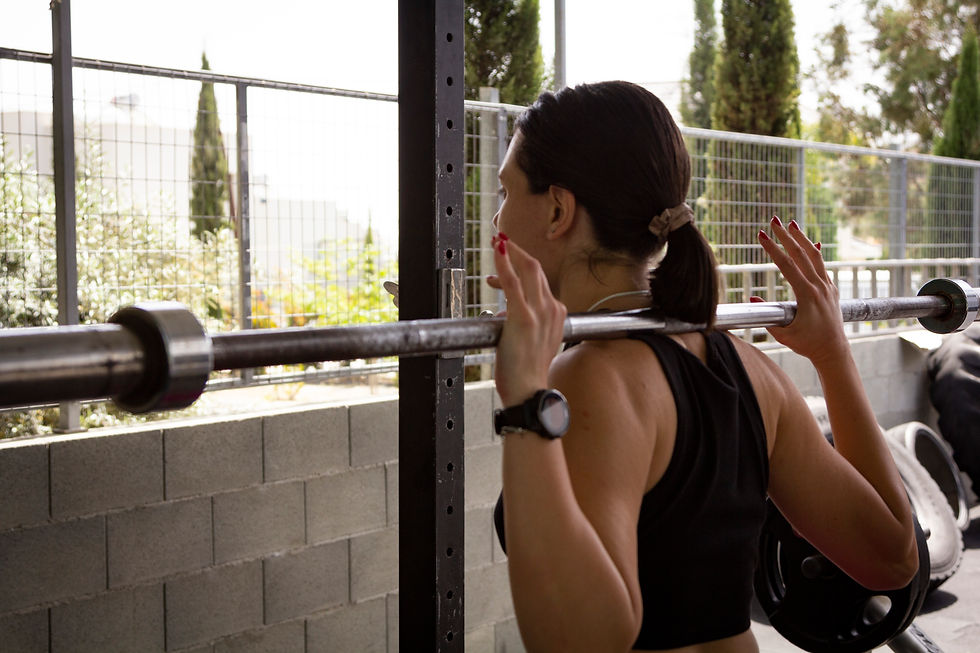
Studies have shown that general strength training like squats or jump squats, helps build muscle mass, reduce injury risk, and improve core stability.These are huge benefits for any athlete.
But when it comes to maximising sprinting performance, for example, exercises need to closely match the movement patterns and speeds of your sport. This is called movement pattern and contraction velocity specificity, a fancy way of saying that your training should look and feel a lot like your sport.
Using sprinting performance as an example, exercises involving bilateral contractions of the leg muscles resulting in vertical movement, such as squats and jump squats, have minimal transfer to performance. However, plyometric training, including unilateral exercises and horizontal movement of the whole body, elicits significant increases in sprint acceleration performance, thus highlighting the importance of movement pattern and contraction velocity specificity.
In short:
✔️ General strength builds the foundation
✔️ Specific, guided training transforms your performance
Why Guided Strength and Power Training Is a Game-Changer
Efficient training means getting the best results for the work you put in. With the right guidance, your strength and conditioning program can:
Build functional strength that supports sprinting, cutting, jumping, and powerful movement
Improve core stability and balance for better overall control
Reduce the risk of soft-tissue injuries by preparing the muscles and joints under realistic demands
Increase your body’s work rate capacity — helping you maintain peak performance under fatigue
Without guided planning, it’s easy to waste time on exercises that don't fully transfer to the field, track, or court. Working with a coach who understands the demands of your specific sport, and how neuromuscular factors like movement pattern specificity affect performance, makes all the difference.
Ready to Take Your Performance To The Next Level?
Whether you’re just starting out or already competing, a tailored strength and power training program can unlock your full potential. At TS Training, we offer both online and on-location coaching for all levels of athletes.
Got questions? Curious how strength and power training could work for your specific goals? Feel free to send us a message — we’re here to help you train smarter and perform better!


Comments